The price of a stack
OneStack gave startups open-source versions of their paid tools under one subscription. People wanted it. Investors wanted in. We stopped anyway. This is why, told by George, one of the two people who built it.
A crazy idea
It started with a crazy idea. Ben and I wanted to go to landfills in Australia that were high emitters of methane, put a generator on site and use the electricity right there to mine Bitcoin.
Adding up
That got us really involved in the startup world. We went to Sunrise, and we did Giants. A lot of the people we talked to had to use a lot of software tools, and the costs were adding up. We were very price sensitive.
Our own server
So I said to Ben: let’s rent our own server, host the open-source versions ourselves and get the full functionality. We told people what we’d done and word got around. Everyone was really interested, so we tried to turn it into a product that could help other people too.
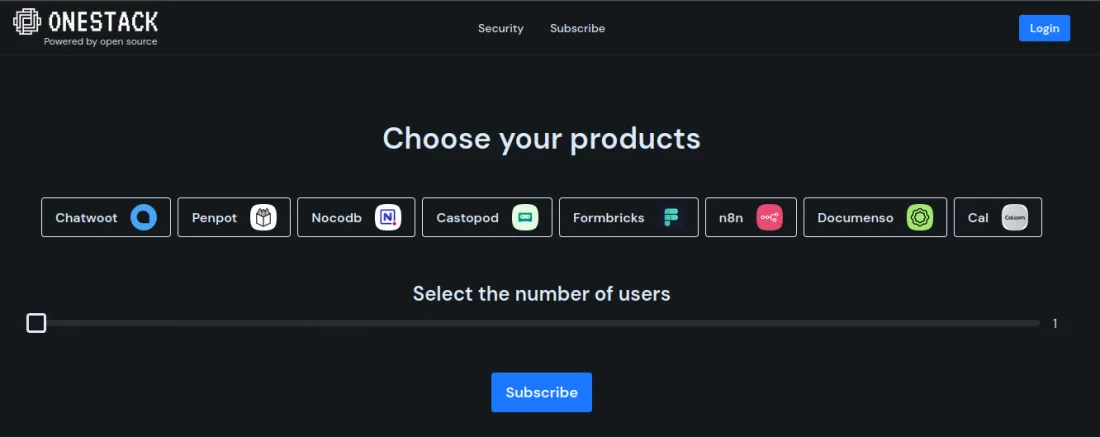
That was OneStack: one subscription, one interface, one click. The first commit was on 21 May 2024. The tools it hosted are all open source and still very much alive: Penpot for design, Matrix for team chat, Cal.com for scheduling, Plane for project management, Formbricks for forms and Documenso for signing documents.
What we found
It got traction. We pitched it to Startmate and Airtree, and three very successful angel investors in Sydney offered to back us. We didn’t take any of the offers.
But a lot of the customers were very price sensitive. So were we. A lot of them were very high touch and low profitability.
Every tool looked and worked differently, because each open-source project is its own thing, and some were a lot better than others. It was also technical and complex, and a lot of people couldn’t understand it. And a lot of people didn’t want to leave popular tools like Figma, because of the clout and the plugins that come with them.
So we stopped. Personal things got in the way, too.
What we took from it:
- Pick the right customers.
- Define the problem correctly, and simply enough that you can communicate it.
- Stay really close to customers and interview them without bias. The Mom Test was really useful for that.
- Let the product do as much of the marketing and selling as it can.
- Still get out there. Put it in front of people, find early testers and get their feedback.
Then AI
Now AI is good enough that a lot of people are building their own software. There are a lot of open-source projects and they’re getting better. There are more security concerns, too.
It’s a funny balance. There’s a lot more software being made, but it almost feels like that has pushed people back to the older, more trusted names. I’m not really sure.
What now
Would OneStack still hold up today? We’d have to rethink the original idea completely and see if it still applies in this AI world. What we do know: we were price sensitive, and so were our customers. Pick the right ones.
If you need software built, go to Digital Nachos. To keep in touch, find George and Ben on LinkedIn. The OneStack code is open source on GitHub.